A credit card balance transfer can look attractive when your current statement shows months of interest charges ahead. Suppose you owe $4,000 and receive an offer advertising 0% introductory APR. Before you accept, we suggest checking what the transfer costs, how much you can pay each month, and what happens after the promotional period. The right comparison keeps your repayment deadline the same on both cards. Otherwise, a smaller monthly bill can disguise a higher total cost.
Get the numbers from the actual offer
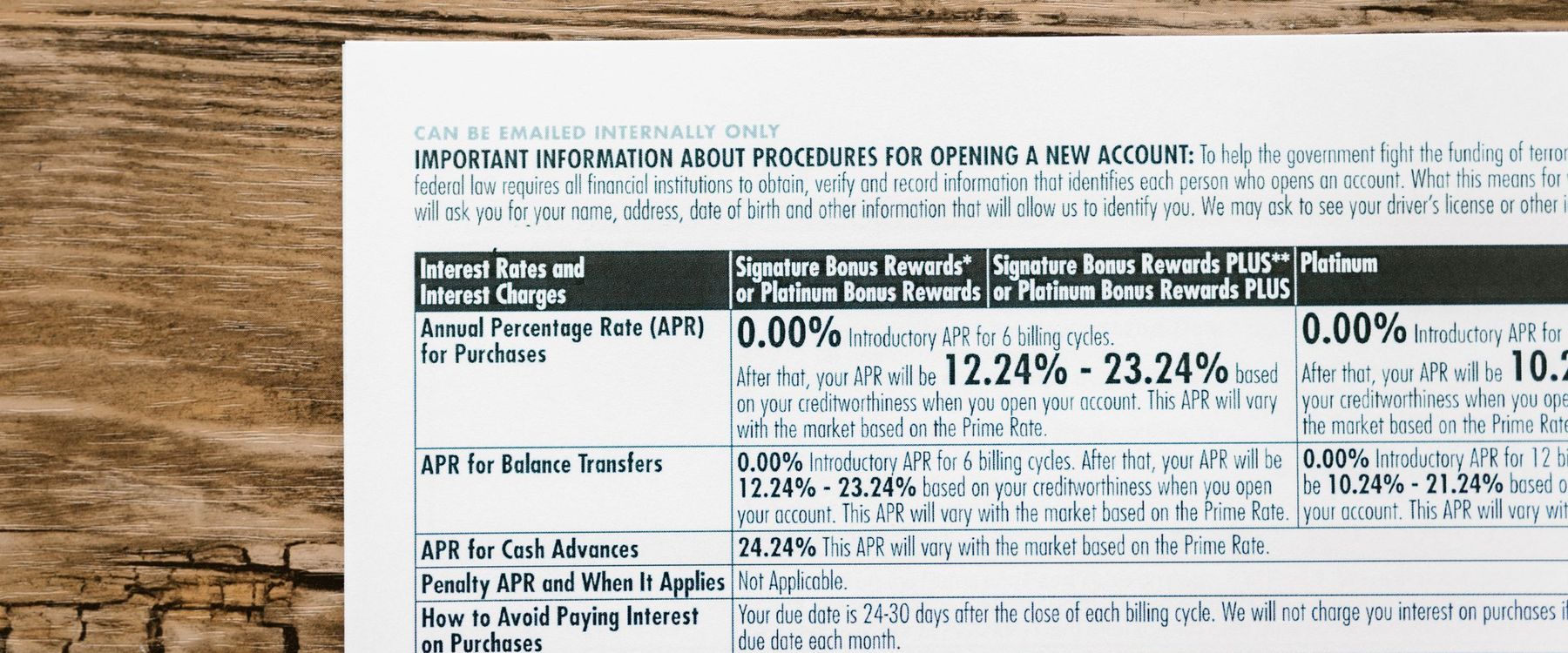
Start with your current balance, annual percentage rate (APR), and the amount you can put toward principal each month. Then read the prospective card’s disclosures. Find the promotional APR specifically for transferred balances, the transfer fee, the date the promotion expires, and the regular APR that applies afterward. A 0% rate on purchases does not necessarily cover transfers.
A transfer fee may be a percentage of the amount moved, a fixed minimum, or another amount specified in the agreement. A card can charge that fee even during a zero-interest offer. Confirm whether the fee joins the new balance and whether the available credit limit covers both the debt and any applicable charge.
Check when the promotional clock starts and whether the transfer must post by a particular date. Approval for a card and completion of a transfer are separate events. Keep paying the existing account until its issuer confirms the balance has actually moved.
Calculate the monthly payment before comparing savings
Here’s a hypothetical offer, not a Secure First Credit Union rate or promotion. You transfer $4,000, pay a 3% fee, and receive 12 months of 0% APR on transferred debt. Assume the $120 fee is added to the transfer balance, no other charges arise, and the stated promotional terms remain in effect. You would owe $4,120. Dividing that amount by 12 gives about $343.33 a month. Paying $343.34 would leave a small margin for rounding.
Now keep the same 12-month target on your current card. Suppose its APR is 22%, interest accrues monthly for illustration, and you make equal payments without new purchases or fees. The approximate payment would be $374.38, with roughly $492.53 in interest across the year. Against that model, the transfer would cost $120 in fees and save about $372.53. Real cards commonly calculate interest using daily balances, so your actual statement figures will differ.
The key is matching the payoff date, not comparing the lowest required payments. If $343 a month stretches your budget, the theoretical savings do little to help. Try the calculation with a payment you can consistently afford, then see how much principal would remain when the promotional APR ends.
Find the costs that a headline rate hides
The biggest uncertainty is often the balance left at the end of the offer. If your regular APR takes effect on that remaining amount, future interest can consume part of your savings. Make sure you understand the exact expiration date and any conditions tied to timely payments.
New purchases can also complicate the calculation. Depending on the account’s terms, carrying a promotional transfer balance may eliminate the usual grace period on purchases. That can produce purchase interest even while the transferred amount receives 0% APR. The promotional rate on transferred debt also expires after the disclosed introductory period.
Review any annual fee, transfer deadline, and rules for allocating payments among balances with different APRs. Minimum payments deserve special attention: the issuer’s minimum may keep the account current while leaving substantial debt beyond the promotional window. If you intend to transfer, consider reserving that card for repayment alone.
Compare the three repayment paths
Choose a single payoff horizon and estimate the total dollars each approach requires. A realistic comparison should reflect your available monthly cash, rather than an ideal payment you rarely have left after bills.
| Path | Upfront cost | Rate and repayment pattern |
|---|---|---|
| Keep existing card | No transfer fee | Existing APR continues; payoff depends on payments |
| Accept balance transfer | Disclosed transfer fee | Promotional APR expires; remainder may face regular APR |
| Use installment loan | Check any origination fee | Payment schedule may be defined; APR and term depend on offer |
A transfer may suit someone who can clear the balance before the promotion ends. For a borrower who needs a longer timetable, compare the total repayment amount and any fees for our personal loan options with the card alternatives. Approval and terms depend on the actual application and disclosures.
Keeping the original card can still make sense when its balance is small enough to repay quickly. Moving debt purely to lower next month’s minimum payment may lengthen repayment and raise the eventual cost.

Turn the decision into a repayment routine
Before you submit a transfer request, write down four figures: the amount that will move, the complete fee, your monthly payoff target, and the last day of the introductory period. Check them against the card’s written terms. Then build a modest cash cushion for a month when car repairs or another expense disrupt your plan.
Schedule payments early enough to meet each statement’s due date, and review the posted balance after every cycle. If the old card retains a few dollars of trailing interest, settle that amount separately. Avoid assuming a completed transfer automatically closes the old account.
At Secure First, we want members to compare borrowing decisions in dollars and dates they can verify. If the required monthly payment works and the transfer’s full cost beats your alternatives, it may be worth considering. If the math depends on perfect circumstances, revise the plan first. Moving debt between accounts cannot resolve a continuing gap between income and spending.